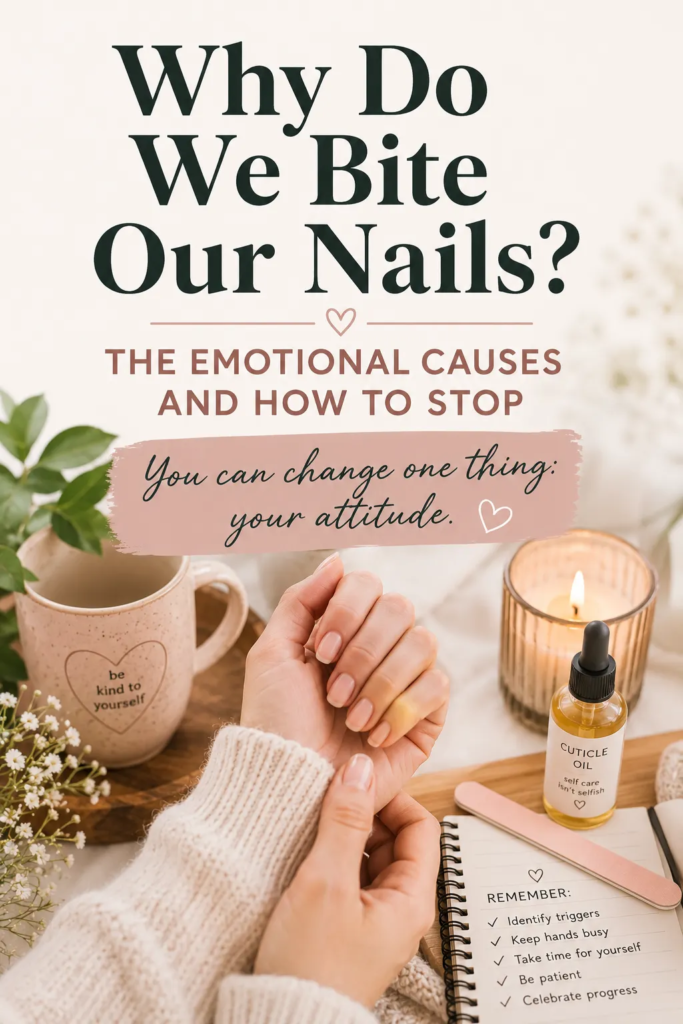
Understanding the emotional triggers behind nail biting—and discovering healthy, lasting ways to break the habit.
Nail Biting Is More Than Just a Bad Habit
Many people believe that nail biting is simply a bad habit that can be stopped with enough willpower. In reality, it is often much more complex than that.
Nail biting, medically known as onychophagia, is often an automatic behavior triggered by stress, anxiety, boredom, or emotional tension. In many cases, people don’t even realize they are biting their nails until they notice damaged nails or sore fingertips.
The good news is that nail biting is a learned behavior, which means it can be understood and gradually changed with the right approach.
Why Do We Bite Our Nails?
There is no single cause of nail biting, and the reasons can vary from person to person.
Some of the most common triggers include:
- Stress
- Anxiety
- Boredom
- Automatic behavior while concentrating
- Releasing emotional tension
- A habit formed during childhood
- Perfectionism
- Pressure from work or school
- Feelings of uncertainty or emotional overwhelm
Many people only realize they have been biting their nails after they have already damaged the nail plate or injured the surrounding skin.
What Does Psychology Say?
According to mental health professionals, nail biting belongs to a group of behaviors known as Body-Focused Repetitive Behaviors (BFRBs).
This group also includes:
- Hair pulling (trichotillomania)
- Skin picking (dermatillomania or excoriation disorder)
- Lip biting
- Nail biting
For many people, these behaviors temporarily reduce stress or create a sense of relief.
However, this does not mean that everyone who bites their nails has a mental health disorder. For many individuals, it is simply a deeply ingrained habit developed over many years. In other cases, persistent stress or emotional challenges may contribute to the behavior, and recognizing these underlying factors can be the first step toward lasting change.
What Problems Can Nail Biting Cause?
Chronic nail biting may lead to:
- Brittle or damaged nails
- Injury to the nail bed
- Painful cracks around the nails
- Skin infections
- Inflammation
- Nail deformities
- Increased exposure to bacteria and viruses
- Damage to the teeth
In severe cases, nail growth may even become permanently affected.
How Can You Stop Biting Your Nails?
1. Identify Your Triggers
Pay attention to when you start biting your nails.
For example:
- While working
- During studying
- Watching television
- Using your phone
- During stressful situations
Awareness is always the first step. Once you recognize your triggers, it becomes much easier to replace the habit with healthier responses.
2. Keep Your Nails Short and Well Groomed
Well-maintained nails often make you less likely to bite them.
Helpful nail care products include:
- Cuticle oil
- Hand cream
- A quality nail file
When your nails look healthy and well cared for, you may feel more motivated to protect them.
3. Keep Your Hands Busy
During stressful moments, it can help to occupy your hands with something else.
Ideas include:
- A stress ball
- A fidget toy
- Twirling a pen
- Drawing or sketching
- Knitting or crocheting
Keeping your hands engaged can reduce the automatic urge to bring them to your mouth.
4. Make Time for Yourself
Nail biting is often a sign of accumulated stress, emotional tension, or mental exhaustion. That is why overcoming the habit is not only about changing your behavior—it is also about taking better care of your emotional well-being.
Try to make time for activities that genuinely help you relax and enjoy yourself.
For example:
- Walking in nature
- Hiking
- Cycling
- Running or other forms of exercise
- Painting or drawing
- Woodworking or DIY projects
- Knitting or crocheting
- Gardening
- Reading
- Listening to music or playing an instrument
- Meditation or breathing exercises
These hobbies do more than keep your hands occupied. They can calm your mind, reduce stress, and provide emotional balance. Over time, making space for enjoyable activities may reduce the emotional tension that often contributes to nail biting.

5. Be Patient With Yourself
Breaking a long-term habit rarely happens overnight.
There will be easier days and more challenging ones, and setbacks are completely normal.
Instead of blaming yourself, try to understand what triggered the behavior. Every small success is a meaningful step toward lasting change.
When Should You Seek Professional Help?
Consider speaking with a psychologist or another qualified mental health professional if nail biting:
- Causes pain
- Leads to bleeding
- Results in frequent infections
- Interferes with your daily life
- Feels impossible to control despite repeated efforts
A professional can help not only with the habit itself but also with managing the underlying stress, anxiety, or emotional challenges that may be contributing to it.
Recommended Reading for Self-Awareness and Stress Management
If you feel that stress, anxiety, or emotional tension may be contributing to your nail biting, you may also find it helpful to explore books focused on self-awareness and personal growth.
📚 Being You, Changing the World by Dain Heer
This book encourages readers to become more aware of themselves, recognize limiting thought patterns, and become more open to personal growth and positive change.
📚 Body Whispering by Dain Heer
This book explores the relationship between the mind and the body, encouraging readers to pay closer attention to the messages their bodies may be communicating.
While these books are not a substitute for medical or psychological care, many readers find them inspiring resources for self-discovery and emotional well-being.
Final Thoughts
Nail biting is often much more than a simple bad habit. For many people, it is an automatic response to stress, anxiety, emotional tension, or long-established behavioral patterns.
Understanding what triggers the habit, maintaining healthy nail care routines, and gradually building healthier coping strategies can significantly improve your chances of overcoming it.
Most importantly, remember this:
Nail biting is not a sign of weakness. It is often your mind and body responding to stress in the best way they currently know how. Real change begins not with self-criticism, but with self-understanding.
By being patient with yourself, making time for activities that support both your emotional well-being and physical health, and choosing hobbies that genuinely bring you joy, you can gradually reduce nail biting while creating a healthier, more balanced lifestyle.
📊 Nail Biting Statistics
Nail biting is far more common than many people realize. It affects both women and men of all ages.
StatisticEstimated RatePeople who bite their nails at some point in life20–30%Children20–30%Teenagers30–45%Adults20–25%Women≈22–25%Men≈18–22%
Key Facts
- Nearly 1 in 4 adults bites their nails regularly or occasionally.
- Nail biting affects both women and men—it is not a women’s issue.
- The highest prevalence is seen during the teenage years.
- Many people continue the habit into adulthood if the underlying triggers are never addressed.
- Nail biting belongs to a group of behaviors called Body-Focused Repetitive Behaviors (BFRBs), together with skin picking and hair pulling.
📌 Did You Know?
Around one-quarter of adults still bite their nails, and research shows the habit affects men and women at similar rates. Stress, anxiety, and emotional tension—not gender—are the most common triggers.